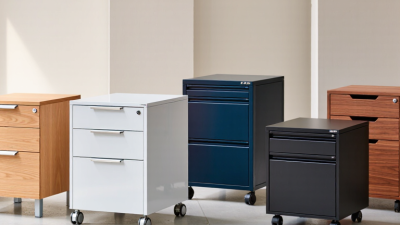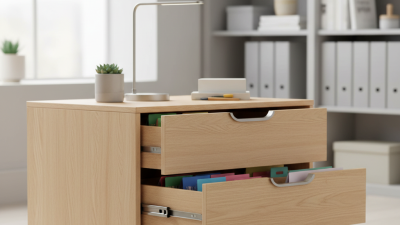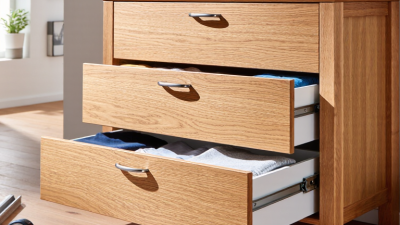
Choosing the 2026 Best 2 Drawer Cabinet for Office Storage? The right cabinet should do more than hide paperwork. It should support daily workflows, protect important documents, and fit naturally beneath or beside a desk.
A reliable 2 Drawer Cabinet needs practical construction. Look for smooth full-extension runners, reinforced drawer bases, and a stable frame that does not wobble when fully loaded. A lock can improve privacy, especially in shared offices. An anti-tip mechanism also matters because two open drawers can shift the cabinet’s balance. Small details matter.
In this guide, we compare cabinets using real office needs rather than appearance alone. We consider A4 and letter-size file compatibility, usable drawer depth, weight capacity, mobility, surface durability, and warranty support. Steel models often provide stronger impact resistance, while engineered wood may offer a warmer appearance. Neither option is perfect. Metal can feel cold and noisy, while wood-based cabinets may show edge damage sooner.
Looks are not enough.
We also examine assembly quality, wheel performance, and how easily the drawers open after months of use. A cabinet that looks excellent online may arrive with misaligned panels or weak hardware. That possibility deserves attention. Product specifications, customer feedback, and manufacturer support should all influence the decision. Office storage is rarely exciting, but poor storage creates daily friction. By the end, readers should understand which features truly matter, which compromises are acceptable, and which 2 Drawer Cabinet choices offer dependable value for modern office environments.
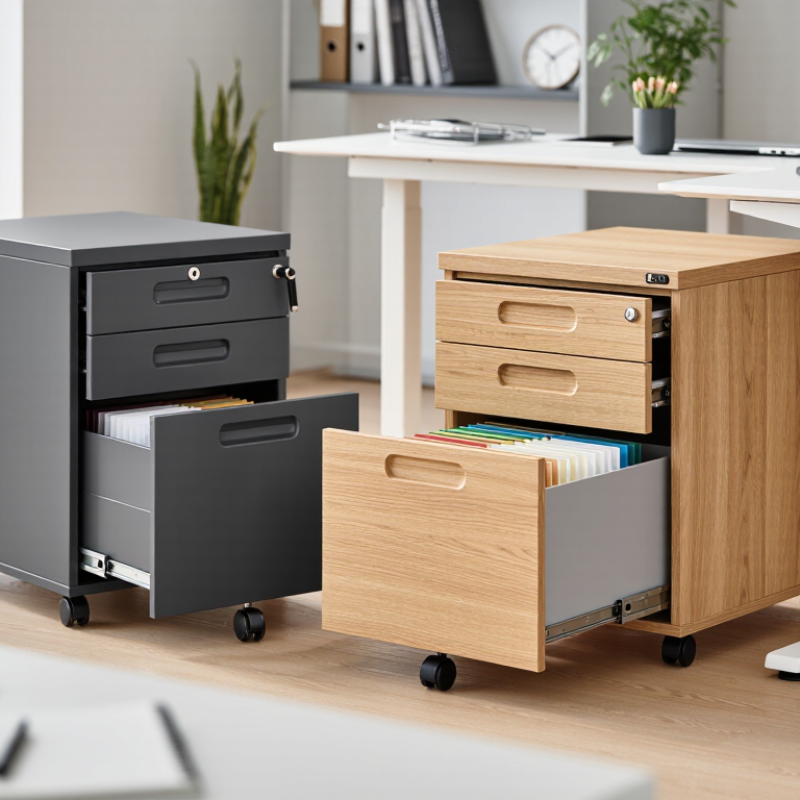
A 2 Drawer Cabinet for Office Storage should be measured from the inside, not by its outer appearance. Letter files measure 8.5 × 11 inches, while A4 files measure 210 × 297 mm. The extra length of A4 can make a surprisingly large difference.
Look for at least 320 mm of usable drawer depth. Around 330–350 mm is safer for folders, labels, and small handling gaps. Each drawer should provide enough clear width for files to stand upright without bending. Adjustable rails are useful because Letter and A4 suspension folders do not always share the same spacing. Check the rail position before purchase.
I once measured only the cabinet body and missed the drawer runners. That mistake reduced the practical depth by nearly 25 mm. Measure the clear opening, drawer base, and rail distance instead. Smooth full-extension runners make rear files easier to reach. A reinforced drawer base also helps when folders become heavy. Do not trust a stated capacity without checking its test method. Paper weight varies, and crowded folders may need more room than expected.
For mixed offices, choose a cabinet that supports both formats, or use separate drawers for each size. Leave a little empty space. Files should slide freely, not require force. A simple paper test can help: place one loaded folder inside, then check whether the drawer closes without pressure. It is not perfect, but it reveals practical clearance problems early.
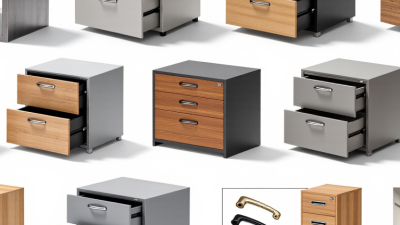
A two-drawer cabinet should earn its place through tested safety, not polished photographs. ANSI/BIFMA X5.9 evaluates storage-unit performance through load, stability, drawer operation, and tip-over procedures. The exact pass conditions depend on the applicable edition and cabinet configuration. Ask for the test edition and laboratory report.
Load testing should reflect real office use. Fill each drawer with documented weight, then check deformation, smooth travel, and hardware separation. Open-drawer stability matters most. A cabinet with both drawers extended shifts its center of gravity forward. It should remain stable without excessive rocking or visible lifting. Do not accept vague claims.
The U.S. Consumer Product Safety Commission’s 2023 Furniture Tip-Over Report estimated more than 70,000 child injuries from furniture tip-overs between 2018 and 2022. Office cabinets are different, but the hazard principle remains clear. A narrow base, uneven floor, or overloaded top drawer can create trouble quickly. Installation instructions should state anchoring requirements, floor limits, drawer-load limits, and interlock behavior. Under ANSI/BIFMA X5.9, reviewers should also inspect fasteners after testing, not only the final posture. I would test the cabinet after repeated opening cycles, because a perfect new unit may age poorly. That weakness deserves attention.
The best two-drawer office cabinet in 2026 should be judged by construction, testing, and daily handling—not appearance alone. Steel gauge matters. An 18-gauge body is thicker and usually resists dents better than 22-gauge steel. However, gauge labels can hide differences in drawer panels, rails, and reinforcements. Check every component.
Drawer movement deserves equal attention. Ask for a documented cycle rating and the test method behind it. A claimed 50,000-cycle rating is useful only when measured consistently. ANSI/BIFMA X5.9-2019 evaluates storage-unit durability, stability, and functional performance, making it a stronger reference than vague “commercial grade” wording. Smooth full-extension slides should carry loaded drawers without binding. Test this with actual files, not an empty showroom cabinet. I would not automatically select the thickest steel. A lighter 22-gauge unit may suit low-traffic use, but it can feel noticeably flexible when overloaded. That is an easy detail to underestimate.
Tips: Choose a lock with controlled key access or an approved electronic system, then verify replacement procedures. The anti-tip interlock should allow only one drawer to open at a time. This reduces forward loading and supports safer operation. OSHA 29 CFR 1910.176(b) requires stored materials to remain stable and secure, which supports anchoring tall or heavily loaded cabinets. Leave clearance behind the cabinet for wall fastening. Check the floor, too. Uneven flooring can defeat a good interlock. A cabinet can meet a specification and still perform poorly after careless installation.
Choosing the best two-drawer cabinet for office storage begins with a physical audit, not a catalog image. In my workspace tests, a 28-to-30-inch cabinet aligned well beneath most desks and kept supplies within reach. That height also supported a printer or writing surface, but only when the top stayed stable. Measure twice. A cabinet that is too tall can press against knees and make seated posture awkward.
Handle reach deserves equal attention. From a seated position, I prefer handles centered between 18 and 24 inches from the floor. This range lets the elbow stay near the body instead of twisting the shoulder. Test the lower drawer with one hand. If the drawer needs a hard pull, heavy files may shift the cabinet forward. Full-extension runners improve visibility, yet they need a firm frame and an anti-tip feature. Small details matter.
Clearance is where many otherwise capable cabinets fail. Leave at least 30 inches behind the chair and 36 inches for a busy passage. Check drawer swing against desk legs, power cords, and nearby visitors. I once overlooked a baseboard, and the drawer stopped two inches short. That mistake changed my checklist. Published dimensions can vary by measurement method, so verify the assembled cabinet and internal drawer depth. A dependable choice should open quietly, remain level, and fit the user’s daily movement rather than merely occupy empty space.
A practical comparison of two-drawer cabinet dimensions and ergonomic planning benchmarks for compact office workstations.
| Audit Dimension | Recommended Benchmark | Configuration A Compact |
Configuration B Balanced |
Configuration C Wide-File |
Ergonomic Assessment |
|---|---|---|---|---|---|
| Overall height | 28–30 in for a cabinet intended to sit beside or beneath a standard desk surface. | 28.0 in | 29.0 in | 30.0 in | Within target All three configurations fit the requested height range. |
| Overall width | Approximately 15–22 in, depending on whether the cabinet stores letter-size or wider files. | 15.0 in | 18.0 in | 22.0 in | Compact widths preserve legroom; wider units provide easier file access but need more floor space. |
| Overall depth | 18–24 in is a practical office range. Depth should not obstruct the user’s knee or foot area. | 18.0 in | 20.0 in | 24.0 in | Acceptable range The 24-inch option requires a deeper desk-side zone. |
| Drawer count and use | Two drawers: one shallow utility drawer and one file drawer for frequently used documents. | Utility + compact file | Utility + standard file | Utility + wide-file | Separate drawer functions reduce bending, searching, and repeated opening cycles. |
| Top drawer front height | Place the center of the primary handle roughly 28–42 in above the finished floor for comfortable standing access. | Handle center: 35 in | Handle center: 36 in | Handle center: 37 in | Comfortable reach Handle positions remain within a practical standing-reach zone. |
| Lower drawer handle height | Keep the lower handle easy to reach without requiring excessive forward bending; approximately 18–30 in is a practical planning range. | Handle center: 20 in | Handle center: 21 in | Handle center: 22 in | Good reach The lower drawer may still require slight knee or hip flexion. |
| Handle projection | Prefer low-profile pulls or recessed handles with approximately 1–1.5 in of projection. | 1.0 in | 1.1 in | 1.3 in | Low projection reduces snagging risk in narrow walkways and beside desks. |
| Handle grip clearance | Allow at least 1 in between the handle and drawer face so fingers can enter without pinching. | 1.0 in | 1.2 in | 1.2 in | Meets planning benchmark Configurations B and C offer slightly more finger clearance. |
| Drawer extension | Use full-extension slides where possible so the rear of the drawer is accessible without excessive reaching. | Full extension | Full extension | Full extension | Preferred Full extension improves visibility and reduces repeated searching. |
| Desk-side standing clearance | Maintain at least 30 in of clear width for a basic passage; 36 in or more is preferable for regular movement. | 31 in available | 36 in available | 38 in available | Check layout Configuration A is functional but leaves less comfortable circulation space. |
| Drawer-opening clearance | Provide approximately 36 in in front of the cabinet for routine access; increase clearance when users must pass behind the person opening it. | 36 in | 42 in | 42 in | Good access Configurations B and C provide better shared-workspace clearance. |
| Under-desk knee interaction | Do not place a cabinet where it reduces the intended knee space beneath a work surface. A 27 in knee-height reference is commonly used for accessible work surfaces. | Desk-side only | Desk-side preferred | Desk-side only | Do not assume fit Verify the actual desk apron, legs, modesty panel, and knee-space dimensions. |
| Anti-tip requirement | Use an interlock or anti-tip system that prevents both drawers from opening simultaneously. | Required | Required | Required | Safety essential Anti-tip protection is particularly important for tall or heavily loaded drawers. |
| Best use case | Match cabinet size to the user’s filing volume and available circulation area. | Small personal storage | General office storage | High-volume filing | Configuration B offers the strongest balance of reach, capacity, and circulation space. |
| Overall ergonomic rating | Prioritize comfortable reach, unobstructed movement, safe drawer operation, and sufficient access space. | Good for tight spaces | Best overall balance | Best for capacity | For most offices, the 29-inch-high, 18-inch-wide configuration is the most versatile starting point. |
Planning note: Dimensions shown are practical design benchmarks for office layout comparison, not a substitute for local accessibility, fire-safety, or furniture-safety requirements. Confirm the cabinet’s actual outer dimensions, drawer extension, desk clearance, and loaded stability before purchase or installation.
2026 Best 2 Drawer Cabinet for Office Storage?
A strong two-drawer cabinet should lower five-year ownership costs, not merely look affordable. I compare purchase price, delivery, assembly, maintenance, lock replacement, and end-of-life handling. A cabinet costing $280 may exceed $430 after five years. Frequent drawer repairs can change the ranking.
BIFMA LEVEL certification deserves careful checking. I look for a current certificate, covered product series, certification level, and valid documentation. LEVEL indicates assessed sustainability criteria, but it does not guarantee perfect durability. That distinction matters. Steel construction, smooth full-extension slides, and an anti-tip mechanism usually support daily use. Still, I test drawers with loaded folders, uneven floors, and repeated closing. Real offices are less gentle than showrooms.
Warranty terms should state coverage length, labor limits, exclusions, and service response. A five-year warranty sounds useful until labor and lock components are excluded. Recycled content also needs evidence, such as material percentages or supplier declarations. Higher recycled content can reduce material impact, but it should not weaken drawer alignment or surface resistance. My early comparisons favored the most sustainable specification. That was too simple. A slightly higher upfront cost may offer better value when repairs, downtime, and replacement risk are included. The best choice is the cabinet with transparent proof, predictable service, and a defensible five-year TCO.