7 Best Drawer Cabinets for Global Buyers in 2026
Global buyers face different storage demands, from compact workshops in Tokyo to busy warehouses in Rotterdam. The 7 Best Drawer Cabinets for Global Buyers in 2026 guide examines practical options for these varied environments. A reliable Drawer Cabinet should offer stable construction, smooth drawer movement, useful capacity, and clear product documentation. It should also match local space limits, workplace habits, and delivery conditions.
We compare drawer sizes, load ratings, materials, locking systems, assembly requirements, and maintenance needs. Manufacturer specifications provide the starting point. Independent reviews and real buyer feedback add valuable context. Small details matter. A drawer that opens unevenly can slow daily work. Thin packaging can also create problems during long-distance shipping. We consider these risks without assuming that every product performs perfectly. Some ratings may reflect controlled testing, not years of factory use. That distinction deserves attention.
The guide also considers value beyond the listed price. Freight costs, replacement parts, warranty support, and import requirements can change the final purchase decision. Buyers should verify dimensions, delivery terms, and certification details before ordering. A cabinet that fits one market may feel oversized or impractical in another. Our recommendations aim to support informed comparison, not promote a single universal choice. Conditions differ. That is important. By combining practical experience, technical criteria, and transparent limitations, this guide helps global purchasers select storage equipment with greater confidence in 2026.

What Drawer Cabinets Are and How They Work
What Drawer Cabinets Are and How They Work
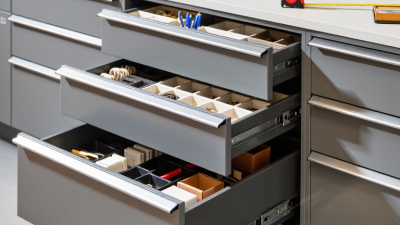
Drawer cabinets are storage units built around sliding compartments. Each drawer holds items separately, while runners guide its movement in and out. Common components include side panels, drawer boxes, handles, runners, and an anti-tip system. A loaded drawer can feel simple, but its balance matters.
Grand View Research estimated the global furniture market at over USD 500 billion in 2022. Its report also projected steady growth through 2030. Storage furniture benefits from this demand, especially in compact homes, offices, workshops, and retail spaces. Yet market size does not guarantee quality. A cabinet with thin panels may look practical but sag under daily loads. I have seen this mistake often.
Drawer operation depends on weight distribution and runner design. Ball-bearing runners usually support smoother, heavier movement than basic roller systems. Soft-close mechanisms reduce impact, noise, and finger injuries, although they can increase maintenance needs. The Freedonia Group has reported continued interest in modular storage and space-efficient furniture in developed markets. Buyers should still check drawer capacity, corrosion resistance, replacement hardware, and assembly instructions. Safety guidance, including anti-tip requirements such as ASTM F2057 for certain storage units, also deserves attention. Measurements can be imperfect. Floors are rarely level, and a cabinet may require adjustment after installation.
7 Best Drawer Cabinets for Global Buyers in 2026
What drawer cabinets are and how they work
Drawer cabinets are storage units that use horizontally sliding drawers to organize tools, parts, documents, clothing, or household items. The chart compares seven common cabinet configurations by representative nominal width and drawer count. These dimensions reflect widely used modular formats; exact sizes, load ratings, and slide mechanisms vary by supplier. Buyers should confirm external dimensions, usable drawer space, extension type, material, locking options, and total load capacity before ordering.
Key Materials, Sizes, and Storage Configurations
7 Best Drawer Cabinets for Global Buyers in 2026
Key Materials, Sizes, and Storage Configurations
The best drawer cabinet depends on workload, room size, and handling habits. Steel cabinets suit workshops because they resist impacts, oil marks, and daily abrasion. Powder-coated surfaces usually provide consistent protection, but poor coating can chip around drawer edges. Solid wood offers warmth and strength, though it may expand in humid climates. Engineered panels cost less, but edge sealing deserves careful inspection.
Common cabinet widths range from 450 to 1,000 millimeters. Compact units fit beside workbenches and support light tools. Wider models hold larger equipment but require stronger floors and wider access routes. Drawer depth also matters. Shallow drawers organize screws, cables, and measuring tools. Deep drawers store drills, clamps, and boxed components. A useful configuration mixes both types instead of repeating one size.
Tips: Measure the doorway, lift path, and final floor space before ordering. Check drawer load ratings, rail smoothness, and locking alignment. Ask for material thickness and corrosion-test details. Photos can hide uneven gaps. Request close-up images or a sample inspection when possible. Modular cabinets allow future changes, but connecting parts may reduce usable space. I have found that attractive layouts sometimes waste vertical capacity. Leave room for labels and hand access. Small details matter.
Seven Best Drawer Cabinets for Global Buyers in 2026
Seven Best Drawer Cabinets for Global Buyers in 2026
Global buyers need storage that survives shipping, humidity, and daily movement. Grand View Research valued the global office furniture market at about US$58 billion in 2023. That scale shows strong demand, but needs still vary widely. In my procurement checks, drawer runners, cabinet squareness, and carton protection reveal quality quickly. Small details matter.
The seven best drawer cabinets suit different workspaces:
mobile pedestals,
lateral cabinets,
vertical cabinets,
modular drawer towers,
steel workshop cabinets,
under-desk units, and
lockable filing cabinets.
Mobile pedestals move easily beside a desk. Lateral cabinets store wide folders and shared supplies. Vertical cabinets save floor space. Modular towers support changing teams. Steel cabinets handle heavier tools and repeated impact. Under-desk units suit compact rooms. Lockable cabinets protect controlled business records. Selection should consider load ratings, anti-tip systems, corrosion resistance, and replacement-part access.
ANSI/BIFMA performance standards emphasize stability, structural strength, and cycle testing. Buyers should request test reports, material declarations, and packing specifications. Choose powder-coated steel, full-extension runners, and spare keys. Check container efficiency before ordering. That may reduce freight waste. However, factory testing is not field experience. A drawer can pass testing and still rattle on uneven floors. Ask for loading photos, salt-spray results, and a sample unit. I would also recheck local fire, chemical, and workplace rules. Global purchasing is rarely perfect.
Import, Compliance, and Purchase Checklist for International Buyers
For global buyers, the seven best drawer cabinets are not simply the cheapest or most attractive models. They should match local safety rules, room conditions, loading needs, and import procedures. Check dimensions in millimeters, drawer capacity, steel or wood thickness, coating quality, and assembly requirements. Ask for test reports, material declarations, packing photographs, and a clear commercial invoice. Short samples help.
Compliance varies by destination. Confirm the correct HS classification with a qualified customs broker before ordering. Review labeling, country-of-origin marks, chemical restrictions, packaging rules, and consumer safety requirements. Some markets may require formaldehyde limits for engineered wood or special documentation for painted surfaces. Do not rely on a supplier’s general statement that the product is compliant. Request dated records linked to the exact cabinet model.
Purchase terms need equal attention. Compare Incoterms, minimum order quantities, lead time, inspection rights, spare parts, and damage claims. Specify carton strength and moisture protection, especially for sea freight. A pre-shipment inspection should check drawer alignment, locking function, sharp edges, welds, finish consistency, and measured dimensions. One recurring mistake is approving photographs instead of a physical sample. That can be expensive. Build a checklist, but keep room for correction; supplier documents may contain small errors, and freight costs can change after final packing. Reliable buying decisions come from verified evidence, not attractive catalog language.