How to Choose the Right Drawer Cabinet for Your Needs?
Choosing the right Drawer Cabinet is not simply a matter of counting drawers or matching a showroom finish. It is about understanding how you work, what you store, and how often you reach for it. A cabinet beside a busy workbench needs different features from one used for jewelry, tools, documents, or kitchen supplies. Measure the available width, depth, and height first. Then observe your daily movements. Do you bend often? Do small items disappear in deep drawers?
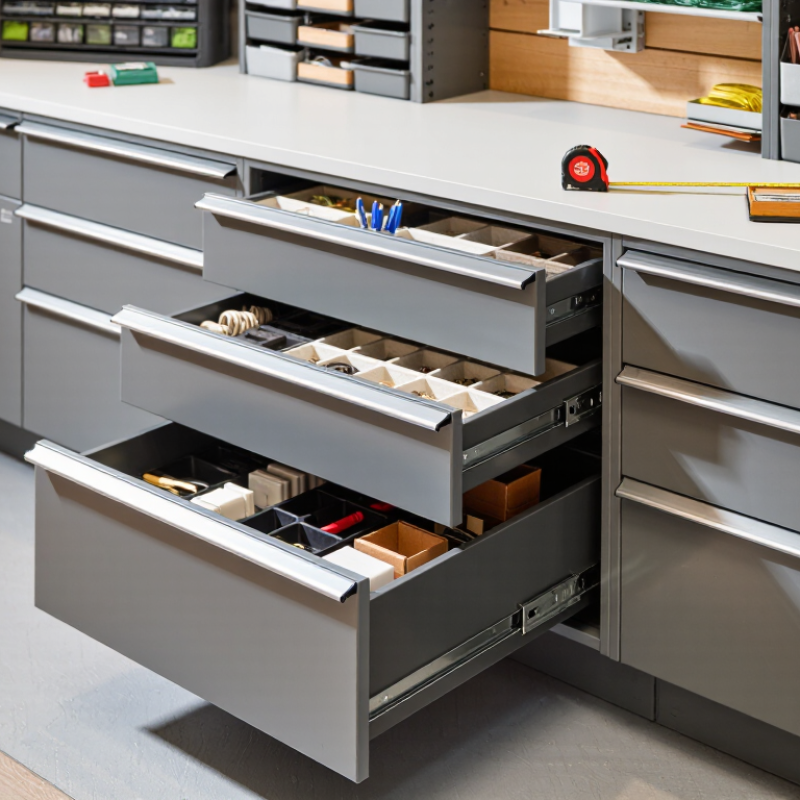
Cabinet designer Jane Lockhart explains, “Good storage should make everyday tasks feel easier, not make people work around the furniture.” That practical view matters. A strong Drawer Cabinet should open smoothly, carry its expected load, and remain stable when several drawers are extended. Full-extension slides can improve visibility, while adjustable dividers help control scattered hardware, cables, or craft materials. Soft-close mechanisms reduce noise, but they may not be essential for a workshop cabinet.
Material deserves attention too. Steel suits demanding environments and resists many impacts. Solid wood offers warmth and can be repaired. Engineered panels may provide value, though their edges need careful protection from moisture. Do not overlook drawer height. A shallow drawer may organize pens beautifully, yet frustrate anyone storing bulky tools.
Your budget will influence the decision. Still, the cheapest cabinet can become expensive after repairs or replacement. I have found that appearance often receives too much attention. Usability matters more.
Choose slowly. Test the movement. Picture the cabinet after five years, not five minutes.
Define Storage Needs Using 28–30-Inch Ergonomic Work-Height Guidance
How to Choose the Right Drawer Cabinet for Your Needs?
A drawer cabinet should support the way work actually happens. Start by measuring your preferred work height, not the cabinet alone. For many seated tasks, a 28–30-inch surface supports a comfortable elbow position. Your chair, footwear, and task tools can change that measurement. Test the height with a temporary box or stacked boards before ordering. Small adjustments matter.
Storage needs also depend on drawer depth and access frequency. Keep daily tools between knee and shoulder level. Place heavier items in lower drawers to improve stability. Full-extension drawers make rear contents easier to inspect, while shallow drawers reduce frustrating piles. Check the cabinet’s load rating carefully. A crowded drawer can become difficult to open and may affect balance. In my own layout, I once prioritized capacity over reach. It looked efficient. It was not.
Tips: Sit at the proposed height for ten minutes. Open each drawer with both hands. Leave enough clearance for knees, feet, and nearby doors. Measure the widest tool, including its handle. Add dividers only after testing your real workflow. A neat insert can still waste space. Also, consider anti-tip features when several drawers may open together. Product specifications deserve attention, but physical testing often reveals details measurements miss.
Match Drawer Capacity and Rated Loads to ANSI/BIFMA X5.9 Criteria
Choosing the right drawer cabinet starts with how people will use it, not how many drawers it has. ANSI/BIFMA X5.9 provides a useful framework for evaluating storage-unit safety, durability, and performance. Check whether the cabinet has been tested against the current edition of the standard. Ask for test information, not only a sales-sheet number.
Match each drawer’s rated load to the items it will hold. Paper files create a different demand from hand tools or dense metal parts. A shallow drawer rated for 40 pounds may suit documents, while heavier contents require stronger slides and reinforced construction.
Consider the load distribution, too. Weight placed at the front can stress slides more than evenly arranged contents. Leave practical clearance for labels and handles.
Capacity can look impressive on paper. It may still be unsuitable. Measure usable interior space, not just outside dimensions. Check whether fully loaded drawers open smoothly and whether an interlock limits multiple openings.
Stability matters when drawers extend. A broad base, level floor, and anti-tip design can reduce movement during daily use.
In workplace evaluations, small details often expose weak choices. A drawer may pass a basic load check but feel awkward after repeated opening. That is worth questioning. Compare rated loads with real operating habits, inspection records, and installation conditions. Standards guide the decision, but careful observation makes the match more reliable.
Choose Cabinet Dimensions While Preserving ADA’s 36-Inch Clear Route
How to Choose the Right Drawer Cabinet for Your Needs?
A suitable drawer cabinet should support storage without narrowing the accessible path. Begin by measuring the finished space, not the empty construction area. Keep at least 36 inches of clear route between the cabinet face and the opposite wall, counter, or equipment. Include handles, trim, and nearby obstacles in your measurement. A deep cabinet may offer more storage, but it can quietly reduce comfortable movement.
Open drawers need attention too. A cabinet might preserve 36 inches when closed, then block the route when a drawer extends outward. Choose shorter drawer depths where circulation is limited. Consider the user’s reach, wheelchair movement, and the need to approach the cabinet from the side. In real installations, small measurement errors can create a frustrating path. A layout may look generous on paper but feel tight in daily use. That deserves another review.
Tips:
Mark the 36-inch route with tape before ordering. Open every planned drawer and test the path. Measure finished flooring and wall surfaces. Check local accessibility requirements with a qualified professional, because project conditions and applicable standards can differ. Avoid assuming that one cabinet size suits every user. A little flexibility helps.
Compare Steel Gauges, Lock Types, and UL 962 Safety Certifications
Choosing a drawer cabinet starts with steel gauge, not appearance. A lower gauge means thicker steel and greater resistance to dents, twisting, and loaded-drawer stress. For daily workshop use, 18- to 20-gauge bodies usually offer a practical balance. Heavy tools may justify 16-gauge construction, but added weight can complicate delivery and floor loading.
Lock design matters just as much. Key locks are simple and dependable. Electronic locks improve access control and auditability, but batteries and software can fail. A mechanical combination lock avoids batteries, though forgotten codes create delays. Check drawer interlocks, anti-tip mechanisms, and full-extension slides. The U.S. Consumer Product Safety Commission reported 234 furniture tip-over deaths from 2013 through 2022. That figure is not cabinet-specific, but it makes anchoring and stability hard to dismiss.
Tips: Ask for the tested load per drawer, not only total capacity. Confirm whether the stated gauge includes paint. Request documentation for UL 962 certification, and verify the certificate covers the complete cabinet configuration. UL 962 addresses electrical safety for household and commercial furnishings, so it may not replace local fire, electrical, or workplace requirements. A cabinet can carry a certification mark and still be poorly suited to your room. I have found that users often overlook ventilation, floor unevenness, and emergency access. Those small details become expensive later.
How to Choose the Right Drawer Cabinet for Your Needs?
Compare steel gauges, lock types, and UL 962 safety certification when selecting a drawer cabinet for your workspace.
How to Read the Chart
In the U.S. steel gauge system, a lower gauge number indicates thicker steel. The values shown are nominal thicknesses commonly used for cold-rolled steel: 18 gauge is approximately 1.21 mm, 20 gauge is 0.91 mm, 22 gauge is 0.76 mm, and 24 gauge is 0.61 mm. Actual thickness may vary according to manufacturing tolerances and the steel specification.
Lock Type Comparison
- Keyed cam lock: Simple, economical, and suitable for basic access control.
- Electronic keypad lock: Allows access by PIN and can reduce the need for physical keys.
- RFID or card lock: Useful where access credentials need to be issued or removed centrally.
- Combination lock: Provides key-free access but requires secure code management.
UL 962 Safety Certification
UL 962 covers household and commercial furnishings and is applicable only when the complete product has been evaluated and listed for the relevant intended use. Verify the product label, listing information, installation requirements, and any stated limitations rather than assuming that a cabinet is certified because it contains metal components.
Evaluate Drawer Slides by Cycle Ratings, Extension, and Weight Capacity
Choosing the right drawer cabinet begins with the drawer slides. A cabinet may look solid, yet weak slides can cause daily frustration. Check the cycle rating, which indicates how many open-and-close movements the slides are designed to handle. For a busy workshop, choose a higher rating than a lightly used home cabinet. Count real usage, not guesses.
Extension length also affects access. Full-extension slides allow the drawer to open almost completely, revealing tools at the back. Partial extension may cost less, but hidden items can become difficult to reach. Measure the cabinet depth carefully before ordering. A small mismatch can leave the drawer protruding or unusable.
Weight capacity deserves practical attention. Add the drawer’s weight to everything inside it, including metal tools and organizers. Then leave a safety margin. A drawer carrying 40 kilograms should not use slides rated for exactly 40 kilograms. Ratings can vary by installation quality and loading position. I once underestimated the weight of stored hand tools, and the drawer began moving unevenly within weeks. My first estimate was wrong.
Look for smooth travel and consistent support. Reinforced slides may suit heavy storage, while lighter slides can work for documents or small accessories. Install them level, with matching gaps on both sides. Even a strong slide can bind when the cabinet frame is slightly twisted. Testing one loaded drawer before fitting the entire cabinet can expose problems early.