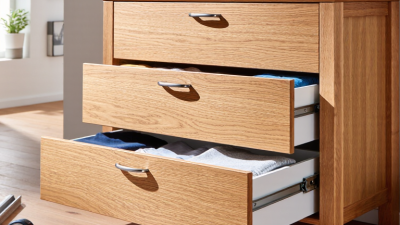
China Top Drawer Cabinet Manufacturers for Global Buyers
China has become a major sourcing base for cabinet furniture, supported by mature supply chains, extensive hardware production, and export experience. CSIL’s World Furniture Outlook 2024 identifies China as the world’s largest furniture producer and exporter. That position matters to global buyers seeking consistent Drawer Cabinet supply.
The market is not defined by price alone. Grand View Research reports continued growth in the global kitchen cabinets market, driven by renovation, housing development, and demand for organized storage. A reliable manufacturer should therefore offer more than attractive catalog images. Buyers should verify board density, edge sealing, drawer-slide load ratings, moisture resistance, and production tolerances.
Details reveal capability. A strong factory can explain its panel core, coating process, and hardware testing method. It should provide clear samples, inspection records, packaging specifications, and traceable production stages. Certifications such as ISO 9001 can support quality management, although certification alone proves little.
Experience still matters.
Factories serving North America, Europe, Australia, and the Middle East usually understand varied dimensions, labeling rules, and packaging expectations. However, export history should be checked through references, shipment records, and independent inspections. Some suppliers appear highly professional online but struggle with color consistency or delayed replacement parts. That weakness deserves attention.
This guide examines China’s leading Drawer Cabinet manufacturers through product quality, customization, manufacturing capacity, communication, and after-sales reliability. The ranking is not absolute. Buyer requirements differ, and even an experienced manufacturer may not suit every project. A careful comparison can reduce costly surprises before the first container leaves the factory.
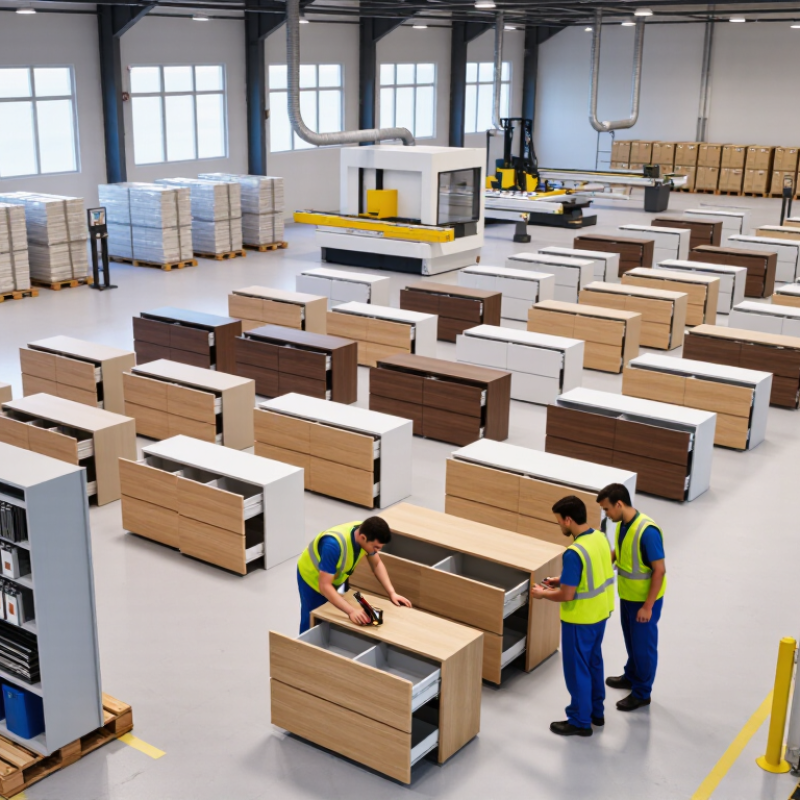
What Defines a Top Drawer Cabinet Manufacturer in China
A top drawer cabinet manufacturer in China is defined by evidence, not polished catalogs. General Administration of Customs data reported China’s furniture and parts exports at roughly US$73 billion in 2023. This scale creates opportunity, but export volume alone proves little. Serious manufacturers show stable production records, documented material sources, and repeatable quality controls.
Engineering capability matters. A reliable factory can provide drawer-load calculations, moisture-control procedures, and test reports for runners and panels. It should explain tolerances clearly, such as a 1–2 millimeter alignment range. Production samples must match approved drawings, edge finishes, drilling positions, and packaging plans. ISO 9001 certification can support process discipline, although certification cannot replace an independent inspection.
Compliance is practical, not decorative. Materials should meet the destination market’s chemical and safety requirements. Packaging should survive vibration, compression, and humid storage. The World Bank’s Logistics Performance Index shows that shipment reliability depends on more than factory speed. Documentation, loading accuracy, and communication also affect delivery performance. Ask for pre-shipment inspection records, corrective-action reports, and traceable batch numbers.
Details reveal maturity. Can the factory reproduce a discontinued finish? Can it report defects honestly? No factory is perfect. A manufacturer that hides small problems may create larger ones later. Global buyers should compare audited evidence, pilot-order performance, and after-sales response before committing to volume.
Key Manufacturing Regions and Supplier Capabilities
China’s drawer cabinet industry is concentrated in several manufacturing regions, each with different strengths. Guangdong is known for export-oriented production, metal hardware, and fast product development. Factories there often combine sheet-metal cutting, stamping, welding, and powder coating under one roof. This can simplify communication for customized cabinet projects.
Zhejiang suppliers commonly support mid-volume orders and flexible hardware configurations. Their capabilities may include soft-close slides, modular drawer systems, and flat-pack assembly. Jiangsu has stronger capacity in precision metalwork and automated production. Buyers may find advanced laser cutting, robotic welding, and consistent dimensional control there. Shandong also deserves attention for larger furniture facilities and panel-based cabinet production.
Regional reputation is only a starting point.
A capable supplier should provide material certificates, coating specifications, load-test records, and clear tolerance data. Ask for a production sample before approving bulk manufacturing. Check the drawer gap, weld marks, coating thickness, and packaging protection. Details matter.
In practical sourcing, factory visits can reveal differences that brochures hide. Some workshops have impressive equipment but weak inspection routines. Others use simpler machines and deliver reliable results. That judgment is not always easy. Buyers should review incoming-material checks, in-process inspections, and final sampling records. They should also confirm carton drop tests, container loading plans, and spare-part support. One weakness remains common: suppliers may promise customization before confirming tooling costs and realistic lead times. Clear drawings and written specifications reduce that risk.
How Chinese Drawer Cabinet Manufacturers Manage Quality
Quality starts with repeatable control, not attractive catalog photos. Experienced Chinese drawer cabinet manufacturers inspect board thickness, moisture, density, and surface defects before production.
According to the ISO Survey 2023, China held 426,716 ISO 9001 certificates. That figure suggests broad quality infrastructure, but certification alone proves little about every drawer. A certificate is not proof of every batch.
Incoming inspection teams record material lots and supplier details. Moisture meters help prevent swollen panels and loose joints. On the assembly line, workers check drilling positions, edge-banding adhesion, and drawer alignment. Hinges and runners receive repeated opening tests.
Some factories use AQL sampling plans before packing, while others inspect every visible panel. The difference matters.
Small scratches often appear after final cleaning, not during assembly. Careful producers photograph defects and track rework instead of hiding it.
Chemical safety also requires measurable evidence.
The World Health Organization’s indoor-air guideline sets formaldehyde at 0.1 mg/m³ for a 30-minute average. Responsible exporters request laboratory reports for panels, coatings, and finished cabinets. They also verify packaging strength, carton labeling, and loading records.
These details reduce damage during long-distance shipping. Still, audits can miss rushed overtime production.
Buyers should review recent test dates, batch traceability, random samples, and corrective-action records. Quality management is useful only when workers can stop a line without pressure.
Export Services and Compliance for Global Buyers
China Top Drawer Cabinet Manufacturers for Global Buyers
Export Services and Compliance for Global Buyers
Experienced cabinet manufacturers support more than production. They help buyers manage samples, specifications, packaging, inspections, and shipping documents. A practical export team confirms drawer dimensions, load capacity, surface finishes, and hardware before mass production begins. Small errors spread.
Compliance depends on the destination market. Manufacturers should provide material declarations, safety test reports, labeling details, and traceability records when required. For wooden components, buyers may request documentation for timber sourcing and formaldehyde emissions. Electrical parts, if included, require separate testing and certification. The correct HS code, commercial invoice, packing list, and certificate of origin also reduce customs delays.
Packaging needs equal attention. A drawer cabinet can leave the factory undamaged but arrive with crushed corners or swollen panels. Strong cartons, edge protectors, moisture barriers, and drop testing can reduce this risk. Container loading photos and pre-shipment inspections give buyers useful evidence. Still, no production line is perfect. An honest supplier records defects, investigates their cause, and adjusts the process instead of hiding inconvenient results. Buyers should review factory capability, audit records, and corrective actions before placing large orders. Clear Incoterms and agreed inspection standards prevent costly misunderstandings. The details are not glamorous, but they protect the shipment.
China Top Drawer Cabinet Manufacturers for Global Buyers
Export planning and compliance often depend on selecting the right shipping unit. The chart compares approximate internal dimensions of common dry containers used for drawer cabinets and furniture shipments.
Dimensions are approximate nominal internal measurements in metres. Actual specifications may vary by container manufacturer, carrier, and equipment condition. Buyers should confirm packing plans, cargo weight, documentation, labeling, and destination-market requirements before shipment.
How to Evaluate and Select the Right Chinese Manufacturer
Selecting a Chinese drawer cabinet manufacturer requires more than comparing quoted prices. In my sourcing experience, factory verification often reveals details that catalogs hide. Ask for business licenses, production addresses, export history, and recent project references. A video tour helps, but an independent audit offers stronger evidence. Check whether the workshop controls panel cutting, edge banding, drilling, assembly, and packing. Consistent processes reduce fitting problems during installation. Request samples made from your approved drawings, not standard showroom pieces. Examine drawer gaps, runner movement, surface finish, screw placement, and carton protection. Small defects matter.
Tips:
Use a written specification sheet. Include dimensions, board thickness, moisture resistance, hardware requirements, tolerances, finish codes, labeling, and inspection points. Require a pre-production sample and define who pays for corrections. Ask how the factory handles warped panels, missing hardware, and damaged cartons. Their answer shows operational maturity. Confirm production capacity against your schedule, but do not trust a large number alone. A crowded factory can still miss deadlines. Verify lead times through recent shipment records and milestone updates.
Reliable selection also depends on communication. Test response speed, technical knowledge, and willingness to admit limitations. One supplier once accepted every request, then struggled with an unusual corner cabinet. That experience taught me to challenge optimistic promises early. Use an independent pre-shipment inspection when order value justifies it. Keep payment terms tied to documented milestones and approved quality results. Relationships help, but written evidence protects both sides. Trust is earned slowly.