5 Best 4 Drawer Cabinets for Global Buyers
Choosing the right 4 Drawer Cabinet requires more than comparing prices and glossy product images. Global buyers must assess capacity, materials, hardware, safety, delivery conditions, and after-sales support. A cabinet that works in a quiet home office may fail in a busy workshop.
Industry data shows why this category deserves closer attention. Grand View Research valued the global office furniture market at approximately US$54 billion in 2023 and expects continued growth through 2030. The report links demand to hybrid work, workplace renovation, and improved storage needs. Meanwhile, Fortune Business Insights identifies durability, modular design, and space efficiency as important furniture purchasing factors. These trends support the growing relevance of compact drawer storage for offices, retail spaces, studios, and household work areas.
Still, market data cannot choose a cabinet for every buyer. It does not reveal whether drawers open smoothly after repeated use. It cannot show a dented corner after international shipping. That is where practical evaluation matters. This guide compares five leading 4 Drawer Cabinet options using construction quality, drawer movement, load capacity, lock design, packaging, and supplier reliability. Dimensions also matter. A cabinet may fit beneath a desk but block the user’s knees.
Details matter most.
The selection considers both professional procurement requirements and everyday user experience. It also recognizes an uncomfortable truth: no model is perfect for every region, budget, or climate. Buyers should verify certifications, warranty terms, replacement-part availability, and local import requirements before ordering. The following recommendations aim to make that process clearer, more evidence-based, and less dependent on attractive photographs.
Defining the Essential Features of a Quality Four-Drawer Cabinet
5 Best 4 Drawer Cabinets for Global Buyers
Defining the Essential Features of a Quality Four-Drawer Cabinet
A quality four-drawer cabinet begins with stable construction. Cold-rolled steel resists bending during daily use. Thick panels also reduce vibration when drawers open. Check the stated material thickness, not only the product photographs. I have seen attractive cabinets feel weak after repeated loading. That detail is easy to miss.
Drawer performance matters just as much. Full-extension ball-bearing slides provide smoother access to the back. Each drawer should move evenly, without scraping or sudden stops. Confirm the load rating for every drawer, especially when storing files or tools. A practical test is simple: open one drawer halfway and check for wobbling. It should remain steady. Soft-close slides are useful, but they are not essential if the frame is poorly built.
Safety and usability deserve equal attention. An anti-tip mechanism can prevent multiple drawers from opening together. A recessed handle saves space in narrow rooms. Powder-coated finishes usually handle scratches better than thin painted surfaces. Look for rounded edges, clear assembly instructions, and protective export packaging. Dimensions should match local workspaces and doorways. Some cabinets arrive well protected, yet assembly hardware feels disappointing. I would inspect the fasteners before installation. Small weaknesses often become expensive problems later.
Comparing Five Leading Four-Drawer Cabinet Designs
5 Best 4 Drawer Cabinets for Global Buyers
Comparing Five Leading Four-Drawer Cabinet Designs
Global buyers now compare more than price. Grand View Research valued the global office furniture market at about USD 54 billion in 2023. Storage performance therefore deserves careful attention.
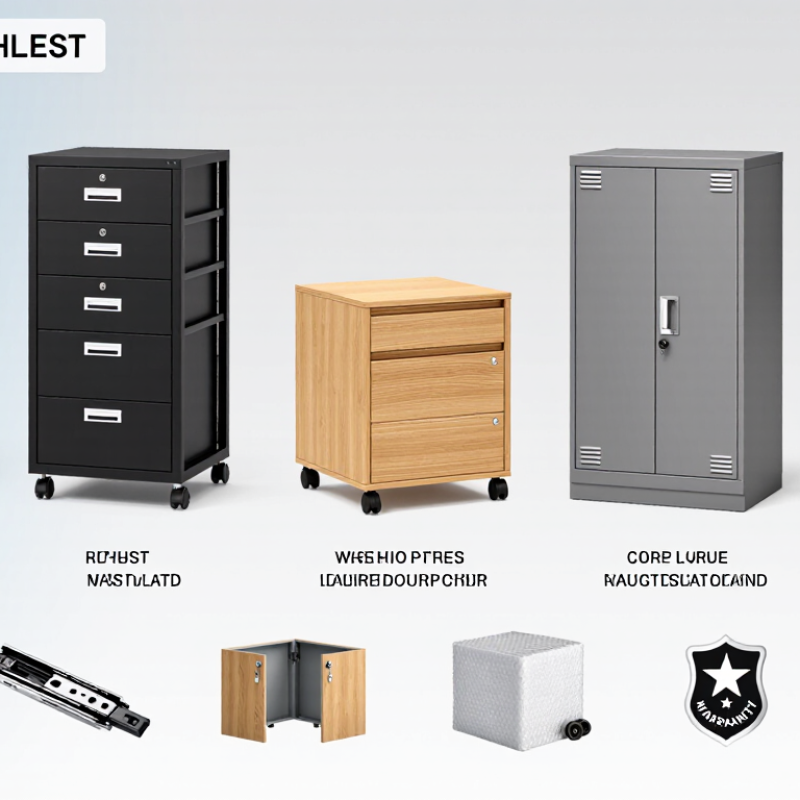
The steel vertical cabinet suits archives and busy workplaces. Its narrow footprint saves floor space, while powder coating helps resist scratches. The mobile pedestal adds flexibility. Four drawers can follow a workstation, but loaded casters may mark softer flooring. The modular melamine cabinet offers warmer interiors and easier color matching. However, edge protection matters in humid regions. Small failures become expensive.
The fire-resistant design provides stronger document protection through tested insulation and locking hardware. Buyers should request independent test evidence, not rely on attractive claims. The recycled-content cabinet supports sustainability goals. Yet recycled material percentages vary, and durability should remain measurable. The fifth option is a reinforced anti-tip cabinet, designed to limit simultaneous drawer opening. ISO 7170 testing is useful when comparing stability and load performance. I prefer smooth runners, full-extension access, and clearly stated drawer capacities. That preference is practical, not absolute.
UNEP’s 2023 buildings report links the built environment to 26% of global energy-related emissions, making material efficiency relevant. Still, one overlooked detail remains: cabinet weight. Shipping a heavy unit across borders may erase its environmental advantage. Check corrosion testing, replacement parts, packaging damage rates, and local safety requirements before ordering. Real performance is rarely perfect.
5 Best 4-Drawer Cabinets for Global Buyers
Comparing five leading four-drawer cabinet designs by usable storage volume, total load capacity, and footprint efficiency. All profiles are anonymized and use metric measurements for international comparison.
Design C provides the highest usable storage volume, while Design E offers the strongest load capacity. Design B has the smallest footprint, making it suitable for space-constrained offices and compact work areas.
Evaluating Materials, Durability, and Storage Performance
A four-drawer cabinet earns its keep through steady performance, not a heavy-looking finish. Solid wood can be repaired, but seasonal moisture may shift its panels. The USDA Forest Products Laboratory’s Wood Handbook explains that moisture content affects wood dimensions and strength. Plywood often resists movement better than particleboard, though edge quality and joint construction still matter. Check drawer bottoms, corner joints, and runner attachments; these small parts often reveal more than a polished surface. Looks can mislead.
For storage performance, test each drawer with everyday items, not just an empty slide. A drawer that scrapes when loaded may have weak runners or a bowed base. Ask for per-drawer load limits, overall cabinet capacity, and information about replacement hardware. Stability matters too: the U.S. Consumer Product Safety Commission reported an average of about 22,500 emergency-department injuries annually from furniture and television tip-overs during 2018–2020. That figure is not specific to cabinets, but it makes anchoring and a broad, balanced base worth checking. Still, test it. Pull several drawers open together, inspect whether the cabinet rocks, and confirm that the anti-tip kit suits the wall and installation setting. A little awkward, perhaps, but useful.
Checking Safety Standards, Dimensions, and Global Compatibility
When comparing four-drawer cabinets, check more than appearance. Ask for documented stability tests, drawer load limits, and clear instructions for securing the cabinet against tipping. Safety requirements differ between markets, so confirm that supplied test reports match the destination country. A vague “tested” claim is not enough.
Measure the cabinet’s full width, depth, and height, including handles and any feet. Then measure doorways, stair turns, lifts, and the final storage space. A cabinet can fit on paper and still get stuck at a narrow landing. It happens. Check drawer extension too; fully opened drawers need room and should not make the unit feel unstable. Compare dimensions in millimetres or centimetres, and confirm which units appear on the specification sheet.
For international orders, verify assembly hardware, language options, packaging protection, and replacement-part availability. Finishes and board materials may also need market-specific documentation, especially when buyers require formal product records. Request a written carton size and shipping weight; these affect handling and delivery planning. Small details matter. I have seen buyers focus on the cabinet dimensions and overlook the assembled handle clearance. That is an easy mistake, and worth checking twice.
Selecting the Best Four-Drawer Cabinet for Different Buyer Needs
Global buyers should match a four-drawer cabinet to the room, not just the product photo. Measure the available width, depth, and height, including space for drawers to open fully. Drawer capacity varies. Check internal dimensions against what you plan to store. Paper files, tools, and folded clothing need different clearances.
Tips: Compare drawer dimensions, load guidance, assembly needs, and shipping details before ordering. Ask for packed dimensions if the cabinet must pass through narrow doors or stairwells. Small details matter.
Material and construction should suit daily use. Metal may work well in busy offices, while engineered wood can feel warmer in living spaces. Check the drawer slides, handles, finish, and whether an anti-tip feature is included. These details affect everyday use, but they cannot guarantee long service. Assembly, floor level, and care matter too. One limitation is easy to miss: a cabinet that looks spacious may have shallow drawers. Choose for the items you actually store, and confirm delivery and return terms for your location. It takes a little effort. It can prevent an awkward fit.