Leave Your Message

10 Best File Cabinet Suppliers for Global Buyers?

Choosing the right File Cabinet supplier can shape workplace safety, storage efficiency, and long-term operating costs. Global buyers need more than attractive catalogs. They need verified materials, consistent production, export-ready packaging, and responsive after-sales support. A cabinet may look sturdy online, yet its drawer alignment can fail under daily commercial use. Small details matter. Steel thickness, slide quality, lock design, anti-tip protection, and load capacity deserve close inspection.

James R. Holloway, a veteran office-storage consultant, says, “A cabinet earns trust when its drawer stays smooth after years of ordinary use.” That practical standard guides this comparison of ten leading suppliers. Each company should be assessed through product range, manufacturing experience, quality controls, customization capability, certifications, and delivery performance. Buyers should also examine warranty terms and replacement-part availability. Those details often become critical after installation.

Not every supplier excels everywhere. That is worth admitting. One manufacturer may offer stronger fire resistance, while another provides better modular designs or lower minimum order quantities. Prices also change with steel costs, freight rates, and regional demand. This guide therefore focuses on useful evidence, not exaggerated claims. Product samples, factory audits, technical drawings, and independent customer references can reveal more than polished marketing language. For international procurement teams, the best File Cabinet supplier is not always the cheapest option. It is the partner that delivers dependable quality, clear communication, and predictable performance across borders.

10 Best File Cabinet Suppliers for Global Buyers?

Definition and Role of File Cabinets in Modern Workspaces

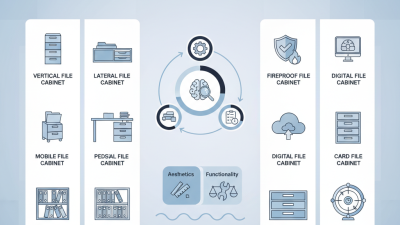
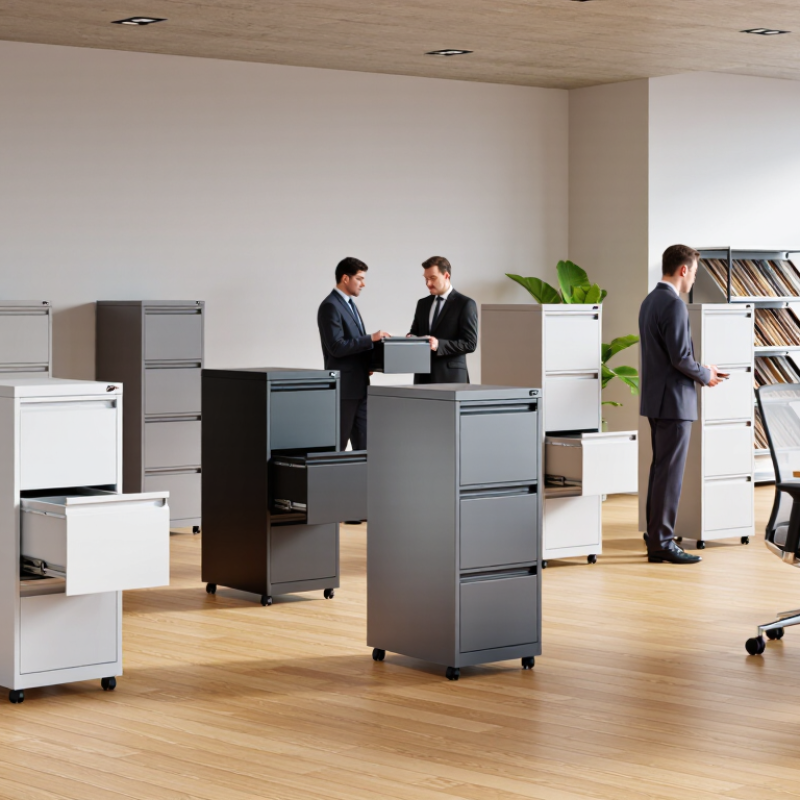
A file cabinet is a storage unit designed to organize, protect, and provide quick access to documents. Common forms include vertical cabinets, lateral cabinets, mobile units, and fire-resistant models. Each type supports a different workspace pattern. Vertical cabinets save floor space, while lateral cabinets offer easier side-to-side viewing.

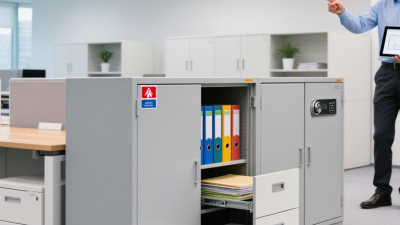
In modern workspaces, file cabinets do more than hold paper. They help define work zones, reduce desk clutter, and protect confidential records from casual access. A well-placed cabinet can sit beside a workstation, under a counter, or along a circulation wall. Smooth drawer slides, adjustable rails, reinforced frames, and reliable locks affect daily usability. Safety also matters. Anti-tip mechanisms can prevent multiple loaded drawers from opening together, although their performance depends on correct installation and weight distribution.

When evaluating suppliers, global buyers should check steel thickness, drawer capacity, coating quality, packaging, spare-part support, and documented testing. Dimensions need careful review, especially for elevators, narrow doors, and modular furniture layouts. A cabinet may appear strong but still feel unstable when fully loaded. That detail is easy to miss. Buyers should also confirm maintenance instructions and regional compliance requirements before placing large orders. Digital records are growing, yet physical files remain important in healthcare, education, finance, and administration. The best cabinet is not always the largest one. It should match the records, workflow, room, and people using it.

10 Best File Cabinet Suppliers for Global Buyers — Definition and Role of File Cabinets in Modern Workspaces

File cabinets are workspace storage units designed to organize, protect, and provide quick access to paper records. For global buyers, compatibility with regional document formats is an important specification when evaluating cabinet suppliers.

The chart compares the official width and length of widely used document formats in millimeters. Cabinet interiors should be sized to accommodate the required paper format, hanging folders, and clearance for smooth access.

Key Types of File Cabinets Available to Global Buyers

Key Types of File Cabinets Available to Global Buyers

Global buyers usually choose among vertical, lateral, mobile, modular, and fire-resistant file cabinets. Vertical cabinets use narrow floor space and suit offices with limited wall width. Lateral cabinets provide wider drawers, easier visibility, and better access for shared records.

A 2024 Grand View Research report projects the global office furniture market to grow at roughly 5% annually through 2030. That growth reflects continuing demand for organized workplace storage.

Mobile pedestal cabinets fit beneath desks and support flexible workstations. Their small drawers hold contracts, stationery, and personal documents. Modular cabinets combine shelves, drawers, and open compartments, which helps buyers adapt storage after relocation.

Fire-resistant models add insulated protection for paper records during heat exposure. However, buyers should verify certified fire ratings instead of trusting general marketing language. Standards, testing time, and internal temperature limits can differ significantly between suppliers.

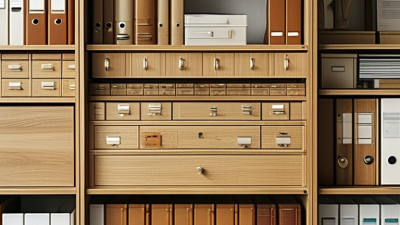
Material choice also matters. Powder-coated steel generally handles frequent use, while engineered wood can match warmer office interiors. According to the Freedonia Group’s office furniture analysis, replacement demand increasingly depends on durability, ergonomics, and workplace redesign.

Locking systems deserve equal attention. Key locks remain simple, but electronic locks may require batteries, maintenance, and local technical support.

I would not treat one cabinet type as universally best. A narrow vertical unit may save space, yet become frustrating when employees share oversized folders. Check drawer extension, load capacity, corrosion resistance, delivery packaging, and spare-part availability before placing a global order.

Criteria for Evaluating International File Cabinet Suppliers

Choosing the 10 best file cabinet suppliers requires more than comparing prices. International buyers should examine factory experience, material consistency, production capacity, and export history. A reliable supplier can provide steel thickness, coating specifications, load ratings, and inspection records. Request recent test reports, not only catalog images.

The World Bank’s Logistics Performance Index 2023 used feedback from 4,090 logistics professionals across 139 economies. It highlights customs, infrastructure, tracking, and delivery reliability as key supply chain factors. These criteria matter when cabinets cross several borders. Check the supplier’s export packaging, pallet dimensions, container loading plan, and damage-claim process. Also confirm Incoterms, lead times, spare-part support, and payment controls. The ISO Survey 2022 recorded more than 1.2 million ISO 9001 certificates worldwide. Certification can support process confidence, but it does not guarantee product quality. I have seen compliant factories still miss drawer alignment during sampling. That weakness deserves an honest review.

Tips: Order a pre-production sample. Measure drawer movement, lock operation, weld quality, and paint adhesion. Ask for a third-party inspection before shipment. Compare total landed cost, not unit price. Include tolerance limits in the contract. Do not ignore communication speed; delayed answers often become delayed documents. A supplier may look excellent on paper, yet factory verification can reveal crowded storage, weak labeling, or inconsistent final checks. My evaluation is never perfect, so I keep a scoring sheet and revisit it after every shipment.

10 Best File Cabinet Suppliers for Global Buyers? - Criteria for Evaluating International File Cabinet Suppliers

An anonymized supplier-screening benchmark for international buyers evaluating metal, mobile, lateral, and fire-resistant filing cabinets.

Rank Supplier Profile Main Product Scope Typical MOQ Indicative Production Lead Time Customization Capability Quality Documentation Export Readiness Warranty Practice Commercial Risk Evaluation Score
1 Supplier Profile A Steel pedestal, vertical, lateral, and mobile cabinets 50–100 units 30–45 days after approved sample High: dimensions, colors, locks, handles, and drawer layouts Material certificates, inspection reports, carton specifications, and test samples Strong
Regular container shipments and standard export packaging
12–24 months for manufacturing defects Low 91/100
2 Supplier Profile B Fire-resistant, high-density, and archival storage cabinets 30–80 units 40–60 days, depending on fire-rating requirements Medium–High: shelving, locking systems, finishes, and labeling Fire-test documentation, steel thickness records, coating reports, and pre-shipment inspection Strong
Experienced with project-based international orders
12–24 months Low 89/100
3 Supplier Profile C Flat-pack steel filing cabinets and office storage units 100–300 units 25–40 days for standard models Medium: colors, knock-down structure, packaging, and locks Basic factory inspection, packing list, product drawings, and coating records Strong
Efficient container utilization and export labeling
12 months Low 87/100
4 Supplier Profile D Premium lateral cabinets, credenzas, and executive storage 30–60 units 35–50 days High: premium finishes, anti-tip systems, accessories, and hardware Product drawings, load testing, surface-finish reports, and inspection checklist Strong
Suitable for commercial office projects
12 months Low 85/100
5 Supplier Profile E Economical vertical cabinets and school or government storage 200–500 units 30–45 days Medium: standard colors, dimensions, locks, and labels Standard inspection report, packing specifications, and basic material declaration Good
Suitable for full-container procurement
12 months Moderate 83/100
6 Supplier Profile F Mobile shelving, compact storage, and archive systems 20–50 systems 45–75 days, including installation planning High: track length, shelving configuration, safety features, and controls Load calculations, safety documentation, installation drawings, and commissioning checklist Good
Best suited to engineered projects
12–24 months Moderate 82/100
7 Supplier Profile G Powder-coated steel cabinets for industrial and warehouse use 100–250 units 35–55 days Medium: shelf capacity, cabinet height, colors, and lock options Steel-gauge records, load testing, coating information, and packaging inspection Good
Regular export capability with standard documents
12 months Moderate 80/100
8 Supplier Profile H Small-office pedestals, under-desk units, and personal lockers 100–300 units 25–40 days Medium: modesty panels, drawer sizes, finishes, and key systems Product specification sheet, sample approval, packing checklist, and visual inspection Good
Suitable for mixed-SKU orders
12 months Moderate 79/100
9 Supplier Profile I Knock-down cabinets for online and retail distribution 300–800 units 30–50 days Medium: retail packaging, assembly instructions, colors, and branding-free labels Drop-test records, carton measurements, assembly instructions, and inspection photos Good
Optimized for pallet and container shipping
12 months Moderate 77/100
10 Supplier Profile J Basic steel filing cabinets and entry-level office storage 300–1,000 units 35–60 days Low–Medium: mainly standard models and color selections Basic product specification, sample inspection, packing list, and pre-shipment photos Developing
Best for buyers with established logistics partners
12 months Moderate 74/100
Evaluation criteria include product coverage, minimum order quantity, lead time, customization, quality documentation, export readiness, warranty practice, and commercial risk. Lead times and MOQs are industry screening benchmarks and should be confirmed through current quotations, approved samples, factory audits, and pre-shipment inspections before purchase.

10 Best File Cabinet Suppliers for Global Buyers

10 Best File Cabinet Suppliers for Global Buyers

Global buyers need more than attractive product photos. The best file cabinet suppliers usually offer stable steel quality, accurate dimensions, and dependable export experience. Ten supplier profiles deserve attention: commercial filing specialists, modular office furniture factories, metal fabrication companies, fire-resistant storage makers, compact mobile cabinet producers, educational furniture suppliers, healthcare storage manufacturers, contract-project suppliers, custom fabrication workshops, and established wholesale exporters.

A reliable supplier should provide material details, load testing, finish samples, and clear packaging specifications. Ask for cold-rolled steel thickness, drawer cycle results, lock options, and corrosion resistance. Request a pre-production sample when ordering large volumes. It may reveal sharp edges, uneven paint, or drawers that do not close smoothly. Small defects become expensive after shipping.

Global delivery also requires practical verification. Review factory photos, inspection records, carton strength, pallet dimensions, and replacement procedures. Suppliers with multilingual documents often communicate more clearly, but language support does not guarantee quality. Check production capacity during peak seasons. A supplier may promise 5,000 units, then struggle with a smaller urgent order. My own shortlist would change after checking sample consistency, not just quoted prices. Buyers should compare total landed cost, including freight, duties, spare parts, and local assembly needs. Ask how recycled steel is sourced and whether finishes meet the destination market’s safety requirements. There is no perfect supplier. Even experienced exporters can underestimate port delays or packaging damage.

Global Purchasing, Shipping, and Compliance Considerations

Choosing among ten file cabinet suppliers requires more than comparing unit prices. In global purchasing, I check steel gauge, drawer load ratings, lock performance, and coating durability. A cabinet that looks sturdy in a showroom may arrive with bent rails after a long sea voyage. Ask for recent factory photos, production records, and a sample packed like a real export order. Small details matter. Confirm drawer dimensions against your folders, not a supplier’s generic chart. I have seen buyers overlook this mismatch.

Shipping terms should be written clearly in the quotation. Confirm the Incoterm, port, insurance responsibility, carton dimensions, pallet limits, and estimated production schedule. Request a packaging test with corner protection, moisture barriers, and internal spacers. For flat-pack units, inspect fasteners and assembly instructions before approving mass production. A low freight rate can hide weak packaging. It may become an expensive lesson.

Compliance needs equal attention. Check the correct HS classification with a licensed customs professional, then verify duties, import permits, labeling, and local safety requirements. For cabinets used in offices or schools, request documentation for anti-tip design, load testing, and surface finishes. Keep certificates tied to the actual model and factory, not a similar product. Audit payment terms, warranty response, spare-part availability, and corrective-action procedures. Supplier audits are useful, but they are not perfect. Recheck critical measurements before shipment. That pause can prevent delays, rejected cargo, and costly rework.