How to Choose the Best Garage Cabinet in 2026?
Choosing the best Garage Cabinet sounds simple, but the wrong choice can waste space and money. In 2026, garage storage must handle heavier tools, changing temperatures, and increasingly flexible home workspaces. A dependable cabinet should protect equipment from dust, moisture, and accidental damage. It should also make daily tasks easier, not create another obstacle. That balance matters.
Not every garage needs the same cabinet. This guide considers room dimensions, wall conditions, storage habits, and realistic weight requirements. Measure the available space before browsing attractive designs. Check door clearance, ceiling height, and nearby outlets. Steel cabinets offer strength, while powder-coated finishes can resist scratches and surface rust. Adjustable shelves, secure locks, smooth drawers, and strong casters also deserve attention. Small details matter. A cabinet that looks impressive may still feel unstable when fully loaded.
This comparison will examine materials, construction quality, safety features, installation demands, warranties, and long-term value. Manufacturer load ratings will be treated as practical limits, not marketing decoration. A reputable brand should provide clear specifications, responsive support, and consistent product information. Installation guidance matters too, especially for wall-mounted units and uneven garage floors. Still, no recommendation is perfect. I have learned that personal habits often matter more than appearance. The “best” cabinet may be oversized for one garage and inadequate for another. Use this guide to question assumptions, compare evidence, and choose storage that remains useful after the first season of heavy use. Good storage should earn its space.
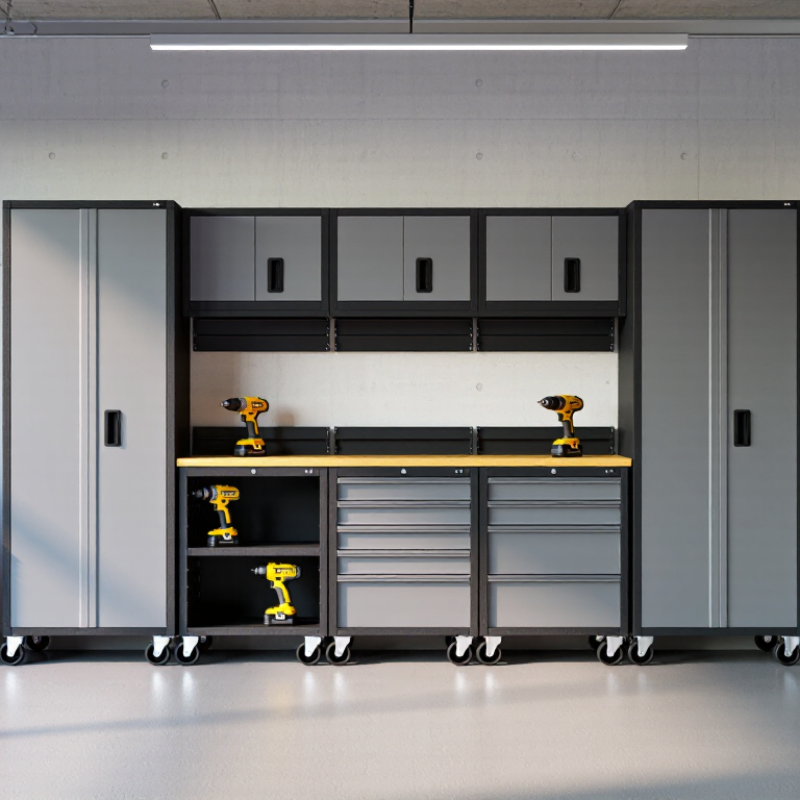
Define Your Garage Storage Needs and Available Space
Before choosing a garage cabinet, define what the space must hold. Measure each wall, corner, doorway, and ceiling height. Record the usable depth, not just the floor area. A cabinet that blocks a car door quickly becomes a daily frustration.
Group your belongings by use. Hand tools, garden equipment, paint supplies, and seasonal items need different storage arrangements. Frequently used tools should stay between waist and shoulder height. Heavy boxes belong on lower shelves. Keep chemicals in secure, clearly labeled storage away from children and pets. Leave enough walking space around cabinet doors and work areas.
Measure twice.
In my garage, I once ignored the swing of a freezer door. The cabinet technically fit, but the layout felt cramped every morning. That mistake changed how I plan storage. I now mark cabinet dimensions on the floor with painter’s tape before buying anything. Check the floor for slopes, too. Uneven concrete can make tall units unstable unless adjustable feet or careful leveling are available. Consider humidity, dust, and temperature changes when selecting materials. Ventilated storage may suit damp equipment, while enclosed cabinets protect clean tools from dust. A simple inventory, accurate measurements, and honest space assessment will guide a safer, more practical choice.
Compare Cabinet Materials, Construction, and Weight Capacity
How to Choose the Best Garage Cabinet in 2026?
Choosing a garage cabinet starts with its material, not its color. Powder-coated steel resists impacts, oil splashes, and daily abrasion. Stainless steel handles humidity better, but usually costs more. High-density plastic avoids rust and stays lightweight. However, plastic can flex under concentrated loads. Wood-based panels feel warm, yet moisture may swell unsealed edges.
Inspect the corners carefully. Welded frames generally feel stronger than flat-pack designs with thin joints. Look for reinforced doors, full-length hinges, and adjustable leveling feet. These details reduce movement on uneven concrete floors.
Weight capacity needs careful reading. A shelf rated for 100 kilograms may require evenly distributed weight. One heavy tool placed in the center can create unexpected stress. Check whether the rating applies to each shelf or the entire cabinet. Also examine drawer slides and the bottom panel.
I once underestimated a thin base panel, and loaded toolboxes exposed the weakness quickly. That experience changed how I compare cabinets. I now test the listed capacity against my heaviest equipment, then leave a safety margin. Specifications are useful, but construction details reveal more.
Tips: Measure the wall, doorway, and working clearance first. Store dense items on lower shelves. Use a cabinet with lockable casters only when mobility matters. For damp garages, inspect seams and drainage points. Do not trust a large capacity number without checking its testing conditions. A slightly smaller cabinet may perform better when built with thicker steel and better bracing.
Check Installation, Maintenance, Warranty, and Long-Term Value
How to Choose the Best Garage Cabinet in 2026?
Installation affects safety, alignment, and long-term performance. Measure wall studs, floor slope, door clearance, and vehicle space before ordering. The U.S. Consumer Product Safety Commission reports thousands of annual tip-over injuries involving furniture and storage units. Anchor tall cabinets securely, even when they appear stable. A level cabinet door is not proof of safe installation.
Maintenance should match real garage conditions. Choose powder-coated steel or sealed composite panels for humid, dusty spaces. The National Association of Home Builders identifies durability and low maintenance as major remodeling priorities in its consumer research. Wipe spills quickly, inspect hinges quarterly, and keep heavier tools below shoulder height. Small details matter. I still check corners twice.
Warranty language often reveals construction quality. Look for coverage on frames, hinges, finishes, and labor, not only replacement parts. The Federal Trade Commission advises consumers to review exclusions, claim procedures, and warranty duration before purchase. A five-year finish warranty may sound strong, but it means little without corrosion exclusions. Photograph installation defects immediately. Keep invoices and assembly records.
Long-term value includes repairability, usable capacity, and future relocation. The 2024 Houzz U.S. Kitchen Trends Study found that 76% of renovating homeowners upgraded cabinetry, showing how central storage remains in improvement projects. Garage use differs, however. Cabinets must handle grit, temperature changes, and heavier loads. Cheap hardware can become expensive twice. Evaluate drawer slides, replaceable parts, and adjustable shelves before judging the price.
How to Choose the Best Garage Cabinet in 2026? - Check Installation, Maintenance, Warranty, and Long-Term Value
| Cabinet Type |
Typical Installation |
Recommended Maintenance |
Moisture and Corrosion Resistance |
Typical Load Capacity per Shelf |
Common Warranty Range |
Expected Service Life |
Long-Term Value |
| Powder-Coated Steel |
2–4 hours for a freestanding unit; wall anchoring is recommended. |
Wipe with mild detergent every 3–6 months; repair chipped coating promptly. |
Good in normal garages; exposed edges and scratches may rust in persistently damp areas. |
150–300 lb (68–136 kg) |
1–5 years, depending on finish and hardware coverage. |
10–20 years with indoor use and good ventilation. |
High |
| Stainless Steel |
2–5 hours; heavier panels may require two people and stronger wall supports. |
Clean every 3–6 months; remove salt, chemicals, and standing water. |
Very good; suitable for humid garages, although welds and contaminated surfaces still need care. |
200–400 lb (91–181 kg) |
3–10 years for structure and finish. |
15–25 years with routine cleaning. |
Very High |
| High-Density Polyethylene |
1–3 hours; lightweight and generally easy to assemble. |
Wash with mild soap every 3–6 months; avoid abrasive cleaners and excessive heat. |
Excellent against water and common household chemicals; may become brittle under prolonged UV exposure. |
100–250 lb (45–113 kg) |
1–5 years. |
8–15 years, depending on sunlight and temperature exposure. |
Good |
| Sealed Plywood |
4–8 hours; accurate leveling and secure anchoring are important. |
Inspect seals annually; reseal exposed edges if swelling, cracking, or water damage appears. |
Fair to good when fully sealed; vulnerable to prolonged leaks and high humidity. |
100–250 lb (45–113 kg) |
1–3 years. |
8–15 years in a dry, climate-controlled garage. |
Moderate |
| Modular Composite Panel |
3–6 hours; adjustable modules simplify expansion but require careful alignment. |
Clean every 3–6 months; tighten connections and inspect adjustable feet annually. |
Good to very good; performance depends on panel core, edge sealing, and hardware quality. |
125–275 lb (57–125 kg) |
2–10 years. |
10–20 years when protected from standing water and impact damage. |
High |
|
Evaluation note: Load capacities, warranty periods, and service lives are typical industry ranges rather than guarantees. Confirm the actual specifications, installation requirements, exclusions, replacement-part availability, and coverage for hardware, finish, and water damage before purchase.
|